
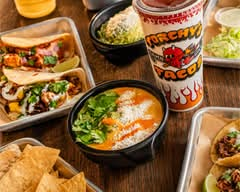
Austin runs on breakfast tacos. It's not a food trend. It's a lifestyle. People here have opinions about tortilla thickness, egg consistency, and whether bacon belongs in the same taco as potato. I've lived here for three years and I've never had a bad taco. But I had also never eaten tacos as my only meal of the day for seven days straight. That changed last month.
The idea came to me in a moment of weakness. I was 20 hours into a fast, scrolling through Instagram, and an ad for Torchy's Tacos popped up. A picture of their "Dirty Sanchez" taco. Scrambled eggs, fried poblano peppers, and a mysterious creamy sauce that looked illegal. My stomach made a noise that my roommate heard from across the apartment. I knew I shouldn't break my fast with something that heavy. But I also knew I was going to.
That's when I thought: what if I just made tacos my eating eating-window-planner for a whole week? I had read about extreme diet experiments. People eating only potatoes, only meat, only McDonald's. I figured I could do a taco-only fast-break experiment. I would fast for 18 hours, then eat one Torchy's taco as my meal. That's about 400-500 calories. Not enough to sustain a full day of energy, but enough to see what happened to my body.
The experiment started on a Monday. I woke up, did my morning routine, and didn't think about food until 2 PM. I walked to the Torchy's on South Congress, ordered a "The Republican" brisket taco, and sat down to eat. It was glorious. The brisket was smoky and tender, the pickled onions added a sharp bite, and the sauce was rich enough to make me close my eyes. For about thirty minutes, I felt like I had discovered the meaning of life. Then the crash came.
I had forgotten what happens when you eat a heavy meal after a long fast. Your blood sugar spikes. Your insulin surges. And then you crash. About an hour after eating, I felt tired. Not just sleepy, but sluggish. My body was working hard to process all that fat and protein. My brain was foggy. I wanted to take a nap.
Day two was similar. I had a "Taco of the Month" that was some kind of pork belly creation. Delicious. Completely worth the digestive distress. But the crash was worse. I felt bloated and heavy. I also noticed that my hunger the next morning was more intense. It was like my body had tasted food and was demanding more.
Day three, I started to adapt. I had a "Trailer Park" taco with fried chicken and green chiles. The shock had worn off. My blood sugar didn't spike as high. The crash was less severe. I was starting to figure out the rhythm. Eat the taco around 2 PM, feel full for a few hours, then ride the wave until bedtime. I wasn't hungry again until the next day.
Day four was the turning point. I realized I had accidentally stumbled into something interesting. The taco-as-OMAD experiment had forced me to eat a very specific kind of meal. High fat, high protein, moderate carbs. And because I was only eating once a day, I was getting a long stretch of autophagy. That's the process where your body cleans out damaged cells. I felt clearer-headed than I had in weeks. My skin looked better. I wasn't experiencing the sugar crashes I used to get from carb-heavy dinners.
Day five, I started craving something different. Not a taco, but something lighter. My body was asking for a vegetable. I ignored it. I had committed to the experiment.
Day six, I had the "Dirty Sanchez" from the Instagram ad that started it all. It was as good as it looked. But something was different. I didn't feel as hungry before eating. I didn't feel as bloated after. My body had adjusted to the routine. It was expecting food at 2 PM and nothing else. The taco was satisfying but not overwhelming.
Day seven, the last day. I walked to Torchy's one final time and ordered the "Brushfire" taco. Spicy, smoky, with a kick that lingered. I ate it slowly, savoring every bite. I felt a little sad that the experiment was over. But also relieved.
I broke the fast properly after that. A big meal with vegetables, rice, and some chicken. Not a taco. My body thanked me. I didn't weigh myself before the experiment because that's not what I was after. But my clothes felt looser. I was sleeping better. And I had learned something important. You can survive on one meal a day, even if that meal is a taco. But you probably shouldn't do it for long.
The weirdest part was that the cravings disappeared. I used to want snacks in the evening. I used to need a sweet bite after dinner. That urge was gone. My body was satisfied with the one meal. It had learned that food wasn't coming again until the next day. That's the power of OMAD. It resets your hunger signals.
I also learned that Austin tacos are a lot more nutritious than I expected. Fresh ingredients, real protein, vegetables in the salsa. It's not junk food. It's just food with a weird shape. I felt good the whole week. Not great, but good. Better than I expected.
The downside was social. Eating with friends was awkward. I had to explain why I was only eating one taco while they had full meals. Some of them looked at me like I was being cheap. Others looked at me like I was crazy. I didn't care. I was chasing data, not approval.
When I resumed my normal 11‑5 fasting eating-window-planner, something had changed. I wasn't as hungry in the morning. I didn't need as much food to feel full. My body had learned that it could survive and thrive on less. That was a gift.
The whole experiment felt like a weird mix of self‑discipline and self‑indulgence. I was disciplined about the fasting. I was indulgent about the tacos. They balanced out. I'm not going to repeat the experiment anytime soon. But I'm glad I did it. And I'm definitely going to eat more tacos. Just not every day.
— Maya, Austin
P.S. My roommate still won't let me live this down. She calls me "Taco Girl" now. I've embraced it.